
Professional Teeth Whitening in Hyderabad: Benefits, Procedure and Results
A bright smile can make everyday moments feel easier, from a family function to a work meeting or a photograph with friends. Yet teeth often lose their brightness over time, even with regular brushing. Tea, coffee, ageing, tobacco, medication, and old dental work can all affect the shade of natural teeth.
Professional teeth whitening is a dentist-supervised cosmetic dental treatment that helps lighten stains on natural teeth. For many people, it offers a safer and more predictable option than trying multiple over-the-counter products without knowing the cause of discoloration.
At Pradham Dental Clinic in Kondapur, Hyderabad, the whitening process starts with understanding your teeth, gums, oral health, and expectations. This matters because whitening is not the same for everyone. Results vary depending on the type and depth of stains, and restorations such as crowns, veneers, and fillings do not whiten like natural tooth enamel.
This article is for general information only and should not replace a dental consultation.
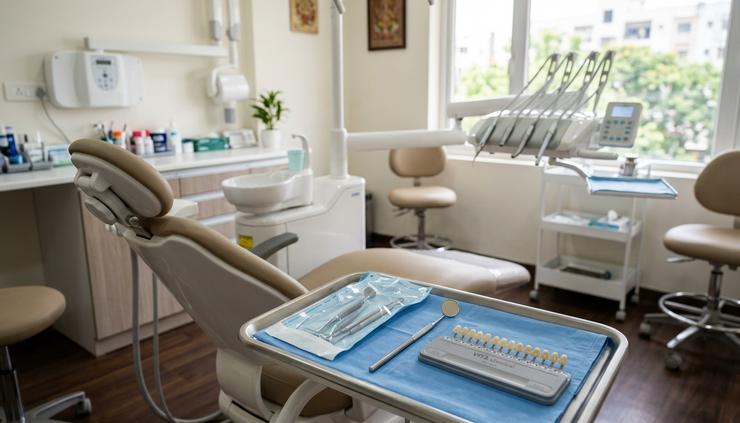
What professional teeth whitening means
Professional teeth whitening is a cosmetic dental procedure that uses dentist-approved whitening agents to lighten discolouration on natural teeth. The whitening gel usually contains peroxide-based ingredients that break down stain molecules within the enamel and dentine.
The aim is to improve the shade of natural teeth while protecting the gums and soft tissues as much as possible. A dentist also checks whether whitening is the right choice before starting treatment.
This is different from a routine dental cleaning. Scaling and polishing remove plaque, tartar, and surface stains. Whitening works on tooth colour more directly by targeting deeper stains that cleaning alone may not change.
Why a dental examination comes first
A dental examination is recommended before any teeth whitening treatment. It helps the dentist assess:
Tooth decay or cavities
Gum inflammation or bleeding
Enamel wear or cracks
Tooth sensitivity
Existing crowns, veneers, fillings, or bonding
The likely cause of tooth discolouration
Whether cleaning is needed before whitening
If there are untreated cavities or gum problems, whitening may cause discomfort or give uneven results. In some cases, dental cleaning or treatment for existing concerns should happen before whitening.
People searching for teeth whitening in Hyderabad often compare clinics by convenience, safety, and clarity of advice. A proper consultation is one of the most important steps because it helps set realistic expectations before treatment begins.
Common causes of tooth discolouration
Tooth colour is influenced by enamel thickness, dentine shade, diet, habits, oral hygiene, and age. Some stains sit on the surface, while others develop deeper inside the tooth.
Food, drinks, and lifestyle habits
Dark-coloured foods and drinks can gradually stain enamel, especially when consumed often. Common examples include:
Tea and coffee
Red wine
Cola and dark soft drinks
Curry spices and deeply coloured sauces
Beetroot and certain berries
Tobacco in smoked or smokeless forms
These stains may respond well to cleaning and whitening, depending on how long they have been present and how deeply they have entered the tooth structure.
Ageing and natural enamel changes
As teeth age, enamel can become thinner. The yellowish dentine beneath the enamel may show through more clearly. This can make teeth look darker or warmer in tone even if oral hygiene is good.
Whitening may help improve brightness, but the response can vary because age-related colour change may involve both enamel and dentine.
Medication, injury, and developmental factors
Some types of discolouration are more complex. Tooth colour may change due to certain medicines taken during tooth development, excess fluoride exposure during childhood, trauma to a tooth, or changes after root canal treatment.
These cases may not respond to whitening in the same way as everyday stains from food and drinks. A dentist may discuss other cosmetic options if whitening alone is unlikely to achieve the desired shade.

How the teeth whitening procedure works
A dentist-supervised whitening appointment is planned around your current tooth shade, oral health, and goals. The exact method may vary depending on the clinic and your dental condition, but the general process is similar.
Step one is consultation and shade assessment
The dentist examines your teeth and gums, asks about sensitivity, and reviews any existing dental work. A shade guide may be used to record your starting tooth colour.
This stage also helps identify whether stains are external, internal, or linked to restorations. If you have crowns or veneers in visible areas, the dentist will explain that they will not change shade with whitening.
Step two is preparing the teeth and gums
Before whitening, the teeth may be cleaned if plaque or surface stains are present. During in-clinic whitening, the dentist protects the gums and lips so the whitening gel stays mainly on the tooth surfaces.
This controlled setting is one reason many patients choose professional care rather than applying products at home without guidance.
Step three is applying the whitening gel
The whitening gel is applied to the teeth for a planned period. Depending on the system used, the gel may be refreshed during the appointment. Some whitening systems use a special light, while others rely on the whitening agent alone.
The dentist monitors the process and checks comfort. If sensitivity develops, the treatment can be adjusted.
The teeth whitening procedure is usually straightforward, but it should still be planned carefully. Overuse or unsuitable products can irritate gums or increase sensitivity.
Step four is reviewing the result
After whitening, the dentist compares the new shade with the starting shade. The result may appear brighter right away, though the final shade can settle slightly over the next few days.
The dentist may also give instructions on what to avoid immediately after treatment and how to care for your teeth at home.
Benefits and limitations of professional teeth whitening
Professional whitening can be a useful choice when stains affect confidence or when patients want a fresher-looking smile for an event. It is also helpful for people who feel their teeth look dull despite regular brushing.
Benefits may include:
A brighter appearance of natural teeth
Dentist-supervised use of whitening agents
Protection of gums during the procedure
Shade assessment before and after treatment
Personalised advice based on the cause of staining
Guidance on sensitivity and aftercare
Many people looking for professional teeth whitening value the fact that the treatment is planned after an oral health check rather than selected from a shelf.
What whitening cannot do
Whitening has clear limits. It does not change the shape, position, or structure of teeth. It does not remove tartar. It also does not whiten dental restorations.
Crowns, veneers, fillings, inlays, onlays, and bonding materials keep their existing colour. If these are visible when you smile, the dentist may discuss whether they need replacement after whitening to better match the new shade. This is not always required, but it should be considered before treatment.
Whitening may also be less effective for greyish discolouration, deep internal stains, or tooth colour changes caused by trauma. In such cases, other treatments may be more suitable.

Professional whitening and home whitening products are different
Home whitening products are easy to find, but they are not all the same. Whitening toothpaste, strips, gels, pens, and trays may help with mild surface staining, but results can be limited and uneven.
A key difference is supervision. With dentist-guided whitening, the mouth is examined first. The whitening plan can be adjusted if there is sensitivity, gum recession, enamel wear, or visible restorations.
Professional whitening
Planned after a dental examination, uses dentist-approved materials, protects gums, and includes shade review and aftercare advice.
Home whitening products
May help mild stains, but can be less controlled, may irritate gums if misused, and may not suit people with dental concerns.
Whitening toothpaste generally removes surface stains through mild polishing ingredients. It does not usually change deeper tooth colour in the way peroxide-based whitening treatments can.
Store-bought trays may not fit well. If gel leaks onto the gums, irritation can occur. If whitening is used over untreated decay or cracks, discomfort may increase.
This does not mean every home product is unsafe. It means the right choice depends on the mouth. A dental opinion helps reduce guesswork.
Who may be suitable for teeth whitening
Good candidates for whitening often have healthy teeth and gums, natural teeth with yellow or brownish staining, and realistic expectations. Whitening may be suitable before a wedding, festival, professional event, or simply as part of improving smile appearance.
It may not be advised, or may need to be delayed, in situations such as:
Active tooth decay
Gum disease or bleeding gums
Severe tooth sensitivity
Cracked or worn enamel
Pregnancy or breastfeeding, depending on clinical judgement
Many visible restorations on front teeth
Very deep internal stains
Patients exploring teeth whitening in Kondapur can visit Pradham Dental Clinic for an assessment that looks beyond shade alone. The health of the teeth and gums matters just as much as the cosmetic goal.
If you're considering professional teeth whitening, choosing an experienced dental team is an important first step. At Pradham Dental Clinic, patients can discuss their smile goals, understand the available whitening options, and receive guidance based on their individual dental needs.
Tooth sensitivity after whitening
Temporary sensitivity can happen after whitening. Some people feel a brief sharp sensation when drinking cold water or breathing in cool air. Others may feel no sensitivity at all.
Sensitivity is more likely if there is enamel wear, gum recession, cracks, untreated cavities, or a previous history of sensitive teeth. This is another reason a pre-whitening examination is useful.
A dentist may suggest steps such as:
Using a desensitising toothpaste before and after treatment
Avoiding very cold drinks for a short period
Spacing out whitening sessions if needed
Applying desensitising agents in the clinic
Treating cavities or gum issues before whitening
Sensitivity after whitening is usually short-term, but it should be discussed with the dentist, especially if it is strong or lasts longer than expected.
How long whitening results may last
Whitening results are not permanent. The brighter shade can last for varying lengths of time based on diet, oral hygiene, enamel condition, lifestyle habits, and the original cause of staining.
People who drink tea or coffee often, smoke, or consume strongly coloured foods may notice stains returning sooner. Regular cleaning, good brushing habits, and sensible aftercare can help maintain results.
Results also vary from person to person. A yellowish stain from everyday diet may respond differently from grey discolouration or staining linked to trauma. The dentist can give a more realistic idea after examining your teeth.
A teeth whitening treatment is best seen as a planned cosmetic dental procedure, not a one-time permanent colour change.

How to maintain a brighter smile after treatment
Good teeth whitening aftercare helps protect your results and reduce new staining. The dentist will share specific advice based on the system used and your oral health.
Helpful habits include:
Brush twice daily with a fluoride toothpaste
Floss or use interdental brushes daily
Rinse with water after tea, coffee, or coloured foods
Avoid tobacco products
Schedule regular dental check-ups and cleanings
Use desensitising toothpaste if advised
Follow any diet guidance given after the appointment
Avoid repeatedly using whitening products without dental advice
For drinks that stain, using a straw may reduce contact with front teeth. Drinking water after coffee or tea can also help. These habits do not stop staining completely, but they can slow it down.
If you plan future dental restorations on front teeth, discuss timing with the dentist. Whitening is often done before matching the shade of a new crown, veneer, or filling, because restorations will be made to match the final tooth colour.
What to expect at Pradham Dental Clinic in Kondapur
At Pradham Dental Clinic, Hyderabad, teeth whitening is approached with patient safety, suitability, and realistic expectations in mind. The process starts with a consultation, not just a colour request.
The dentist will assess your teeth, gums, existing restorations, and sensitivity history. If whitening is suitable, you can discuss the expected process, likely limitations, and aftercare steps.
The goal is to help you make an informed decision. Some patients may benefit from whitening. Others may need cleaning first, treatment for dental concerns, or a different cosmetic option. A personalized plan is the best way to avoid disappointment and protect oral health.
If you are considering a brighter smile, consult Pradham Dental Clinic in Kondapur, Hyderabad, for personalized advice about professional teeth whitening and whether it is right for your teeth.


