Dental Crowns in Hyderabad When Do You Need One and How Do They Protect Your Teeth
A cracked tooth, a large cavity, or a tooth weakened after root canal treatment can make everyday biting uncomfortable. In many cases, a dental crown helps protect the tooth instead of removing it.
A crown is not just a cosmetic cap. It is a custom-made cover that fits over the visible part of a tooth to restore strength, shape, and function. For patients considering dental crowns in Hyderabad, understanding when crowns are needed and how they work can make treatment decisions easier.
This guide explains dental crown treatment, common crown materials, the dental crown procedure, how crowns differ from fillings, and how to care for them after placement.
What dental crowns are and how they protect teeth
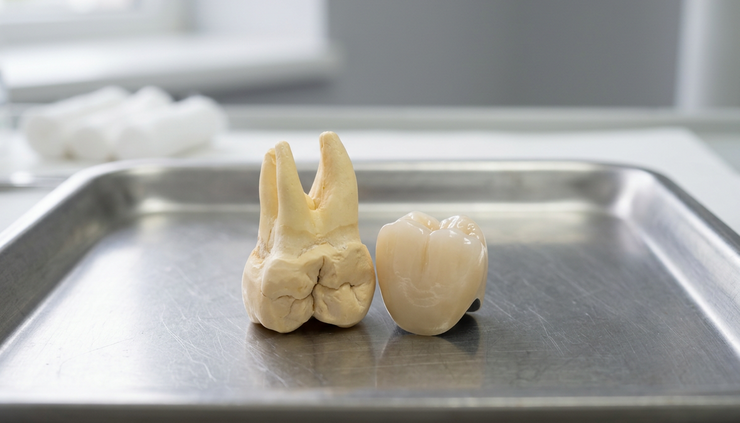
A dental crown is a tooth-shaped restoration that covers the entire visible portion of a tooth above the gum line. It is made to match the bite, size, and appearance of the natural tooth as closely as possible.
Think of a crown as a protective helmet for a weak tooth. When a tooth loses too much natural structure, a small filling may not be strong enough to hold it together. A crown surrounds the tooth and helps distribute chewing pressure more evenly.
A crown can help protect a tooth by:
Holding together weakened tooth structure
This is useful when a tooth has cracks, large fillings, or reduced strength after decay removal.
Restoring chewing function
A properly shaped crown allows the tooth to meet the opposite tooth more comfortably while biting.
Reducing the risk of further fracture
A crown can cover vulnerable areas that may otherwise chip or split under pressure.
Improving shape and appearance
Crowns can rebuild worn, discoloured, or irregularly shaped teeth when clinically suitable.
Protecting a root canal treated tooth
Back teeth often need a crown after root canal treatment because they handle heavy chewing forces.
A crown does not make a tooth indestructible. The tooth beneath it, the gum, and the surrounding bone still need regular care. Good oral hygiene and routine dental check-ups remain essential.
When a dentist may recommend a crown
A crown is usually advised when the remaining tooth needs more support than a regular filling can provide. The decision is based on tooth condition, bite pressure, position in the mouth, and long-term risk.
A dentist may recommend a crown in these situations.
A tooth has a large cavity or large old filling
When decay affects a big portion of the tooth, removing it can leave thin walls behind. A large filling may restore the hole, but it may not protect the tooth from cracking during chewing. A crown can cover and support the remaining structure.
A tooth is cracked or fractured
Some cracks cause pain while biting or sensitivity to temperature. If the crack has not damaged the tooth beyond repair, a crown may help hold the tooth together and reduce movement along the crack line.
A tooth has had root canal treatment
Root canal treatment removes infected or inflamed tissue from inside the tooth. After this, the tooth may become more brittle, especially if it already had decay or a large filling. A crown often helps protect the tooth from fracture.
A tooth is worn down
Teeth can wear due to grinding, clenching, acid erosion, or age-related changes. In selected cases, crowns can rebuild lost height and function. If grinding is present, the dentist may also suggest a night guard.
A dental implant needs a visible tooth replacement
An implant crown is attached to a dental implant to replace a missing tooth. This is different from a crown placed over a natural tooth, but the visible restoration looks and functions like a tooth.
A front tooth needs shape or appearance correction
Crowns can improve the look of severely damaged, discoloured, or misshapen teeth. For mild cosmetic concerns, less invasive options may be discussed first.

Types of dental crowns and how they differ
Different crown materials suit different clinical needs. The right option depends on tooth position, bite strength, appearance goals, gum health, and budget. Your dentist will usually explain the benefits and limitations before starting treatment.
Type of crown | Common use | Main benefits | Points to consider |
Ceramic crown | Front teeth and visible areas | Natural tooth-like appearance | May not suit all heavy-bite cases |
Zirconia crown | Front and back teeth | Strong, tooth-coloured, durable | Needs careful shade matching for highly visible teeth |
Porcelain-fused-to-metal crown | Back teeth and some front teeth | Strength from metal with porcelain outer layer | A dark line may appear near the gum in some cases |
Metal crown | Back teeth, especially where visibility is low | Strong and resistant to wear | Metallic colour makes it less aesthetic |
Ceramic crowns
Ceramic crowns are known for their natural appearance. They can reflect light in a way that resembles enamel, which makes them a common choice for front teeth. They are often preferred when aesthetics matter most.
Zirconia crowns
Zirconia is a strong tooth-coloured material. It is widely used for both front and back teeth. Many patients ask about Ceramic vs zirconia crowns because both can look natural. In simple terms, ceramic may be chosen for high aesthetic demands, while zirconia is often preferred when strength is a key concern.
Porcelain-fused-to-metal crowns
Porcelain-fused-to-metal crowns, often called PFM crowns, have a metal base covered with porcelain. They offer a balance of strength and appearance. They have been used for many years, especially for molars and premolars.
Metal crowns
Metal crowns are strong and need less tooth reduction in some cases. They are usually used for back teeth where appearance is not the main concern. Their durability can make them suitable for patients with strong chewing forces, depending on the case.
There is no single best crown for everyone. The best material is the one that fits the tooth, bite, smile line, and long-term treatment plan.
What happens during the dental crown procedure
The dental crown procedure usually takes more than one visit, unless a clinic uses specific same-day crown technology. Most traditional cases follow a step-by-step process.
The dentist examines the tooth
The dentist checks the tooth, gums, bite, and surrounding area. An X-ray may be taken if the root or bone needs evaluation. If there is infection, deep decay, or nerve involvement, root canal treatment may be needed before the crown.
The tooth is prepared
The dentist reshapes the tooth so the crown can fit over it. The amount of reshaping depends on the material selected and how much tooth structure remains. Local anesthesia is commonly used to keep the patient comfortable.
An impression or scan is taken
After preparation, the dentist records the shape of the tooth and bite. This may be done with a dental impression material or a digital scan. The crown is then made to fit the prepared tooth and align with the opposite teeth.
A temporary crown may be placed
A temporary crown protects the prepared tooth while the final crown is being made. It is not as strong as the final restoration, so sticky and hard foods should be avoided during this phase.
The final crown is fitted
At the next visit, the dentist checks the crown for fit, bite, shade, and comfort. If everything is suitable, the crown is cemented or bonded in place. Small bite adjustments may be made so it feels natural while chewing.
After placement, it can take a few days to get used to the crown. Mild sensitivity may occur in some cases, but persistent pain, high bite feeling, or swelling should be checked by the dentist.

Crown vs filling and how to choose the right option
A filling repairs a smaller damaged area of a tooth. A crown covers the whole visible tooth surface. Both treatments restore teeth, but they are used for different levels of damage.
The choice between a crown and a filling depends on how much healthy tooth is left and how much force the tooth must handle.
Factor | Filling | Crown |
Coverage | Repairs a limited area | Covers the full visible tooth |
Best suited for | Small to moderate cavities | Large decay, cracks, weak teeth, root canal treated teeth |
Tooth support | Relies on remaining tooth walls | Wraps around the tooth for added protection |
Treatment time | Often completed in one visit | Usually needs tooth preparation and crown fabrication |
Appearance | Tooth-coloured options available | Tooth-coloured and metal options available |
A filling may be enough when the cavity is small and the tooth walls are strong. A crown may be better when a filling would be too large or when the tooth has a higher risk of breaking.
This is why Dental crown vs filling is not only about cost or speed. It is about how much support the tooth needs to function safely over time.
How long crowns last and how to care for them
A well-made crown can last for many years, but its lifespan varies from person to person. The answer to How long do dental crowns last depends on several factors.
These include:
Oral hygiene habits
Bite force and teeth grinding
Crown material
Accuracy of fit
Gum health
Diet and chewing habits
Regular dental visits
Crowns can fail if decay develops at the edge, if the cement washes out, if the tooth beneath fractures, or if gum disease affects the supporting tissues. The crown itself cannot decay, but the natural tooth under it still can.
Daily care for a dental crown
Crown aftercare is simple, but consistency matters.
Brush twice a day with a soft-bristled toothbrush.
Clean between teeth daily with floss or an interdental brush.
Pay attention to the gum line around the crown.
Avoid chewing ice, hard sweets, pens, or very hard foods.
Limit frequent sugary snacks and acidic drinks.
Wear a night guard if the dentist diagnoses grinding or clenching.
Visit the dentist for routine check-ups and professional cleaning.
Care while wearing a temporary crown
If a temporary crown has been placed, take extra care until the final crown is fitted.
Helpful steps include:
Chew from the opposite side when possible.
Avoid sticky foods such as chewing gum and toffees.
Avoid hard foods that can dislodge the temporary crown.
Slide floss out gently instead of pulling it upward.
Call the clinic if the temporary crown comes loose.
Signs that a crown needs dental attention
Book a dental visit if you notice:
Pain while biting
Sensitivity that does not settle
A crown that feels high or uneven
Swelling near the gum
Food getting trapped around the crown
A loose or broken crown
Bad taste or smell from the crowned tooth area
Early attention can often prevent a minor crown problem from becoming more complex.

Getting the right evaluation matters
A crown can be an effective way to protect a damaged or weakened tooth, but it should be recommended only after a proper clinical examination. The dentist needs to assess the tooth structure, bite, gums, X-rays where needed, and the long-term health of the tooth.
If you are exploring dental crown treatment or want to understand When do you need a dental crown, a personalized consultation is the safest next step. Searching for a dental clinic in Kondapur can give you options, but the right decision should be based on diagnosis, comfort, material choice, and follow-up care.
This article is for general information and should not replace professional dental advice. Every tooth is different, and treatment can vary based on your oral health.
For a clear evaluation of a damaged, cracked, root canal treated, or weakened tooth, consult Pradham Dental Clinic in Kondapur, Hyderabad. The team can examine your tooth, explain suitable crown options, and help you decide whether a crown is the right way to protect your smile.
Have a damaged or weakened tooth? Consult Pradham Dental Clinic in Kondapur, Hyderabad, and in Pradham Dental Clinic in Manikonda, Hyderabad for a professional evaluation and personalised dental crown treatment recommendation.


